
Breakthrough Swimming

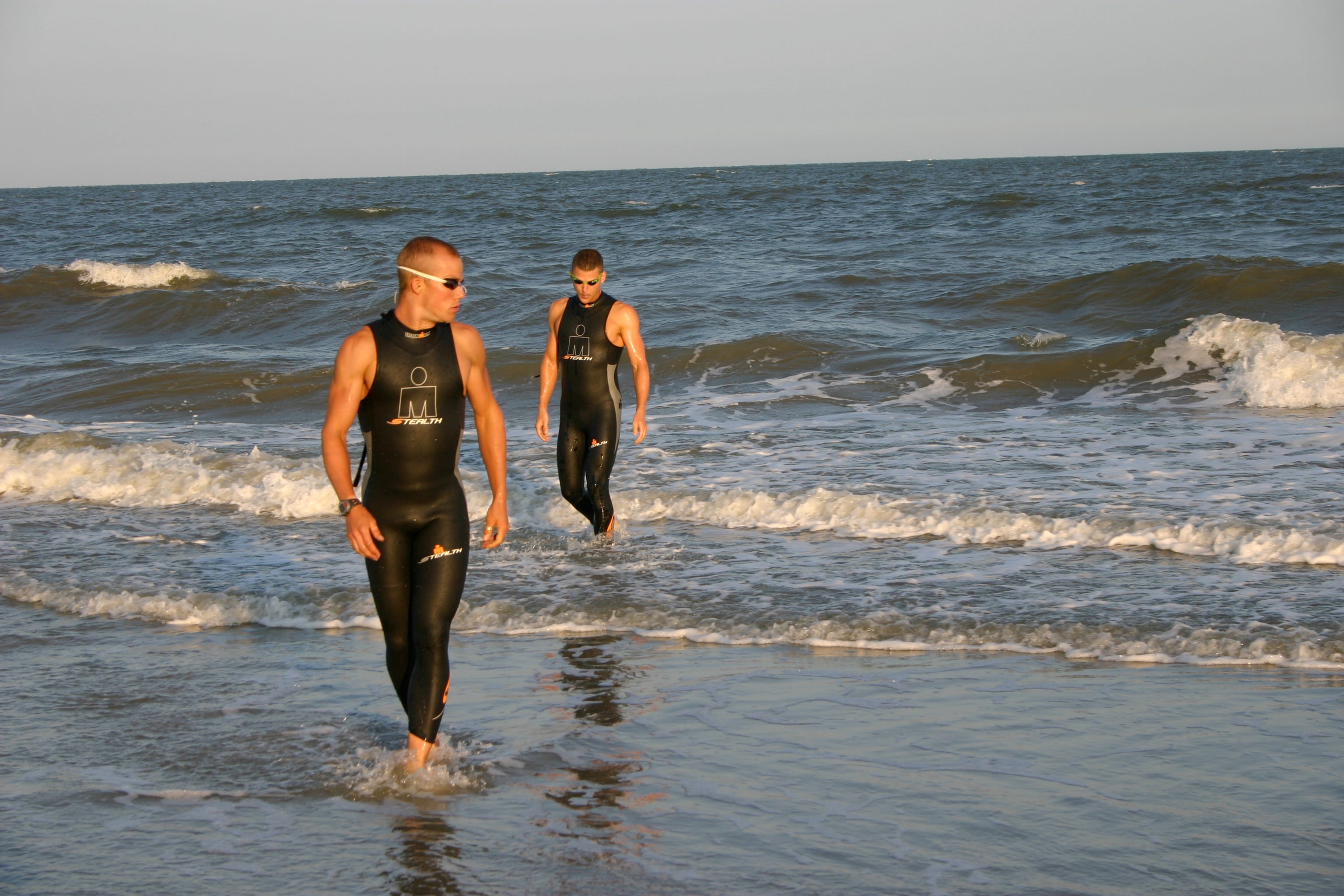
I had a question on instagram about wearing a wetsuit while swimming. I told the reader, I’d have to see their whole program to comment on their individual position. However, there are some general comments I can make as a guy who went from a barely-swimmer (at 30 years old) to sub-50 minute Ironman swimmer (as an elite).
Touch The Water
One of the nice things about learning a new skill, or getting back into shape, is there is tremendous upside from doing anything.
Level One: do something.
Level Two: do something consistently.
Level Three: do more of the thing.
You get the drift. It’s not rocket science.
However, once we are reasonably skilled, it gets increasingly harder to make big gains. So the first thing to decide on both as a swimmer, and in your larger life, is…
…what’s good enough?
Good Enough
I have a clear idea of good enough.
I want to be comfortable sitting on 1:20 per 100 meters pace in a wetsuit.
That singular goal drives my swim program as well as the total energy I am willing to allocate to swim training. Energy spent swimming is not available for other aspects of my plan.
Define good enough and benchmark your current reality to that target.
Energy Management
It takes more energy to achieve a level than maintain it.
If you want to breakthrough with your swimming then you’ll need to devote more total energy to swimming.
Total Energy. You must swim more and more often.
Not intensification of your existing program. Swim squads are mostly plateaued, somewhat exhausted, people.
What’s this going to look like in practice?
A relentless focus on improving swim economy with a goal of greatly reducing the energy cost of all submax paces.
Consistent low-end aerobic volume to improve the metabolic efficiency of your swimming muscles.
If you are weak overall then fix that limiter.
Increase the total number of swims per month.
Apply intensity in the most specific way possible.
Most everyone I swim with is a spray-and-pray trainer. They smash themselves at squad and hope the Red Zone sets miraculously make them better. It’s always been this way and will always be this way. You do not have to play their game.
Winter 2025 Case Study
The pie chart (left), combined with the bike/run zones chart (right), tells the story.
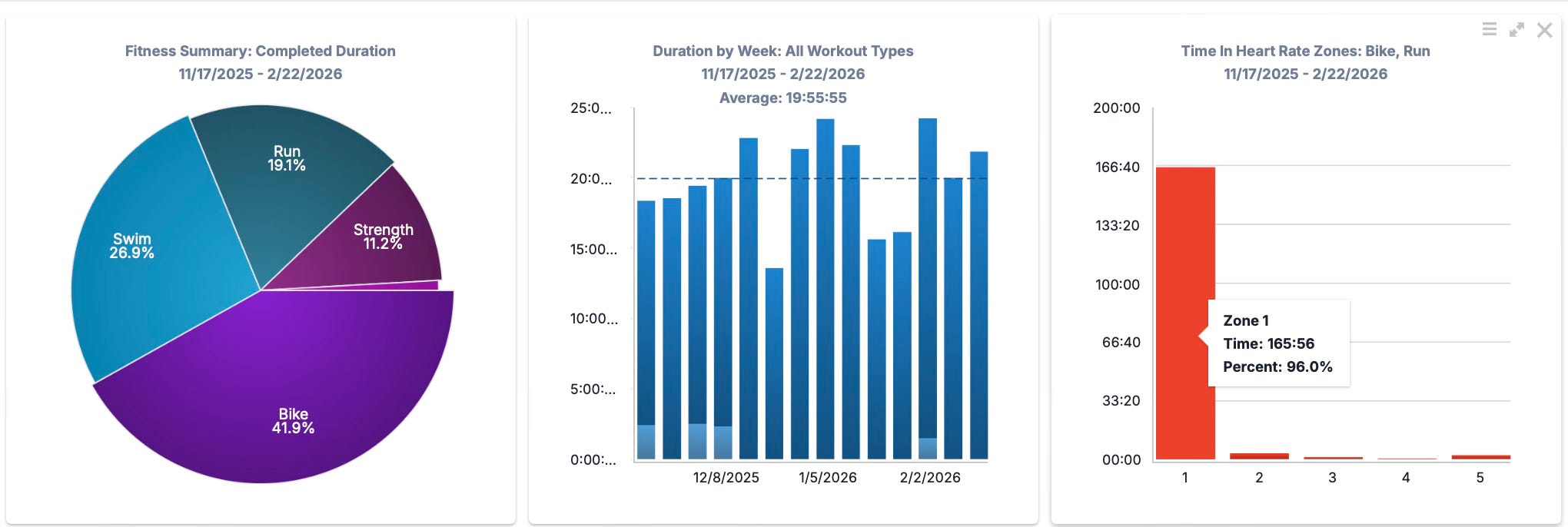
Energy is shifted to swimming (blue slice). Cycling and running intensity is downshifted with 96% of my time spent in Zone 1. Unexpectedly, I set over-50 bests in both the 5K and Half Marathon during this time period. I wrote about that experience.
The energy shift allowed me to spend about an hour per week holding my Core Pace, or faster, wearing a sleeveless wetsuit.
This pace work represented 5% of my total weekly volume (all sports) and was split between two masters sessions.
The rest of my swimming was easy.
In parallel to the swim training, I did a moderate amount of strength training. Some of this strength training targeted my upper body in a general fashion. Getting your upper body stronger boosts swimming, especially when you are swimming nearly every day.
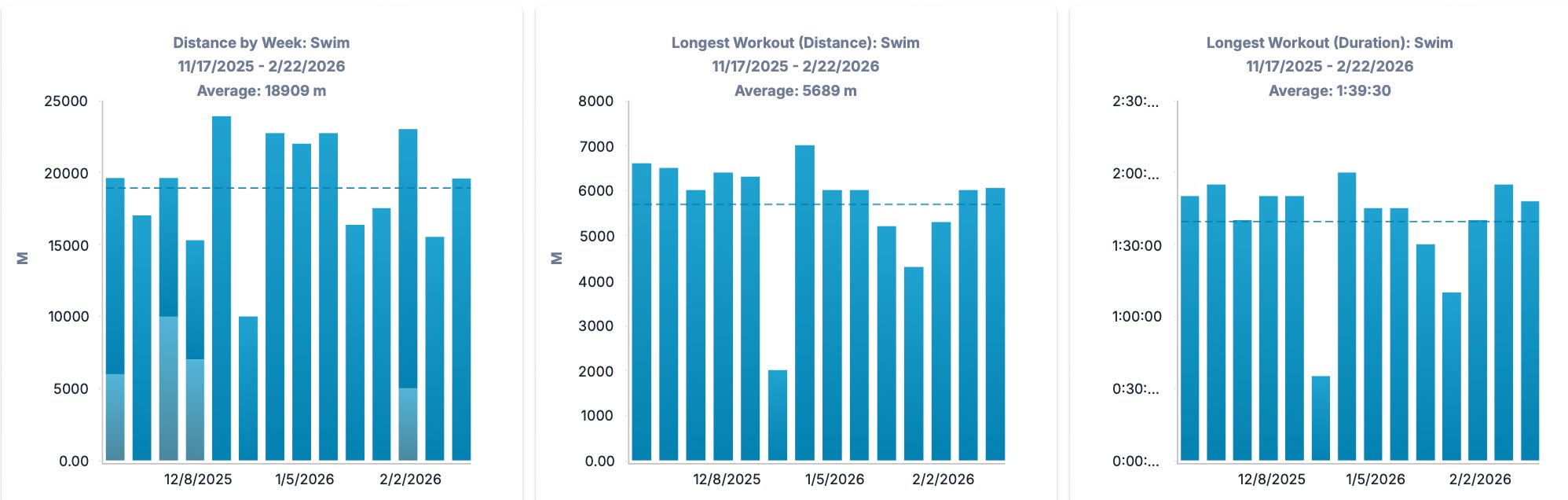
The physiology of swimming is like the physiology of running.
Frequency first.
Then consistent easy volume, working to improve one technical area at a time.
Get one, or two, longer workouts per week.
Finally, add specific work aimed at Core Pace.
With cycling, more works great.
With running and swimming, you’ll do best using more often.
Chapter: Swimming Essentials
👏
FWIW I’d add swim year round if at all possible. Skipping a big winter break has helped me significantly
Thanks Gordo - excellent advice
Does your adage from a while back "The long swims/swim volume is partially for the back half of the IM mararathon" still hold true?