
Lactate Testing Resources
Everything in one place

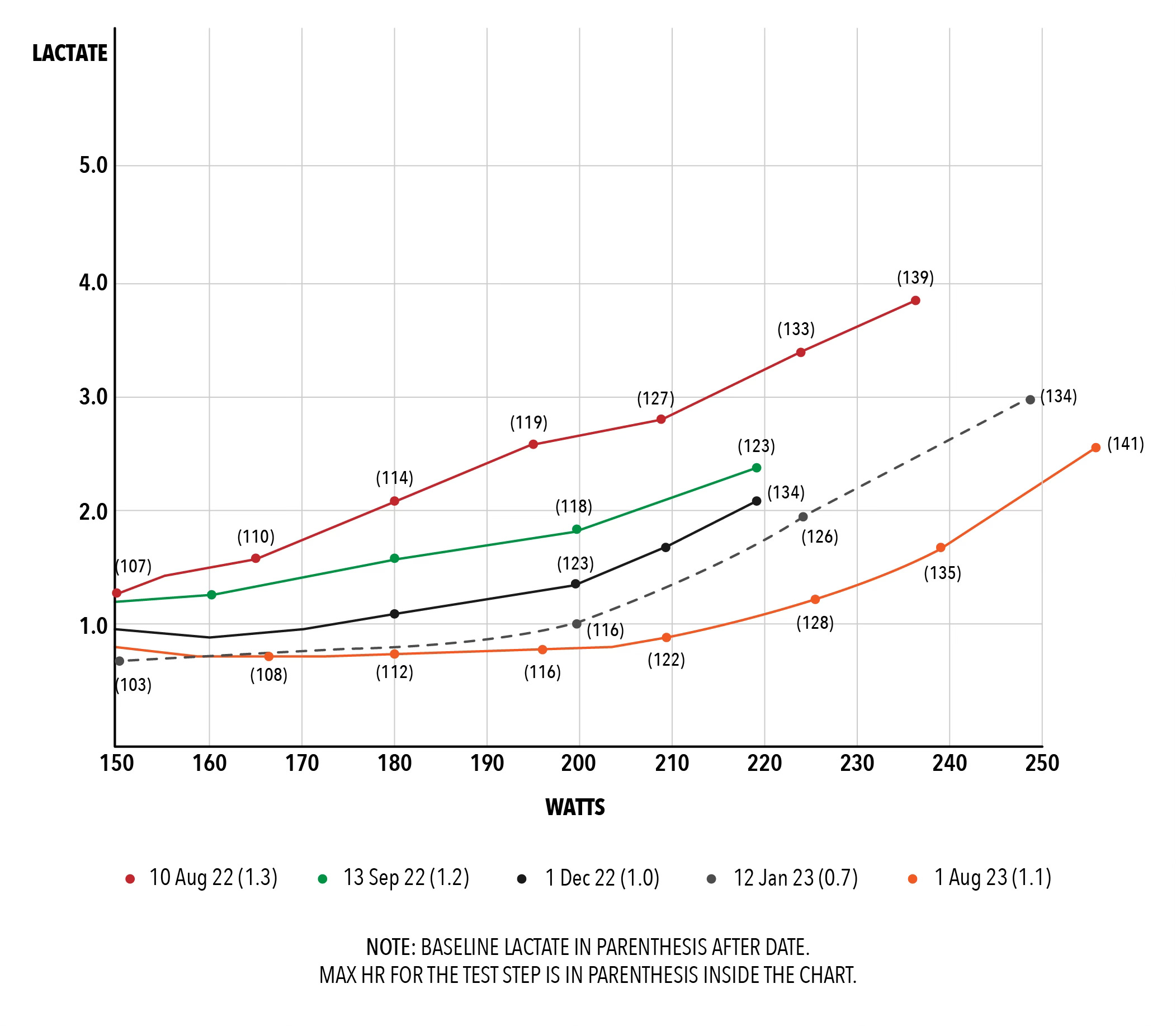
If you are new to testing then be sure to watch the two clips (bottom of this article). I show you:
My testing setup, and
How simple it is to take a sample.
People make this more complicated than it needs to be. The key thing to measure is the first threshold. This can be done during any workout.
Take a baseline sample.
Put the warm-up in the test.
Bottom out lactate.
Make sure you have 3-4 steps inside Zone 1.
Notice when lactate and perceived exertion move up.
Put The Warm-Up In The Test
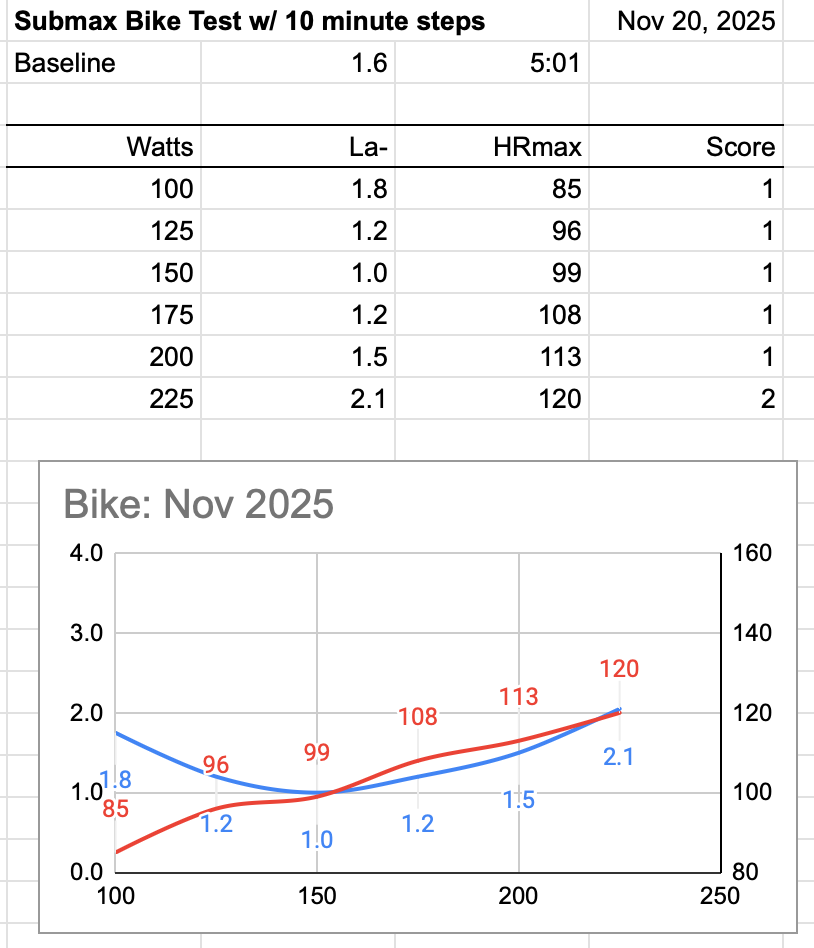
Typically, when I wake up, my lactate is <1.0 mmol. For the test (above), I had breakfast ~30 minutes before starting. Due to eating, my baseline lactate was elevated (1.6 mmol). By starting at a very easy effort, lactate comes down gradually as the test progresses and we get a clear look at the first breakpoint.
In the test, my lactate is rising before my subjective score. This is common, particularly in the early season. I interpret this result as an indication that the athlete needs more Zone 1 / Easy training and there’s no need to insert Zone 2 / Steady efforts.
Lactate Gives Useful Guidance For Green Zones
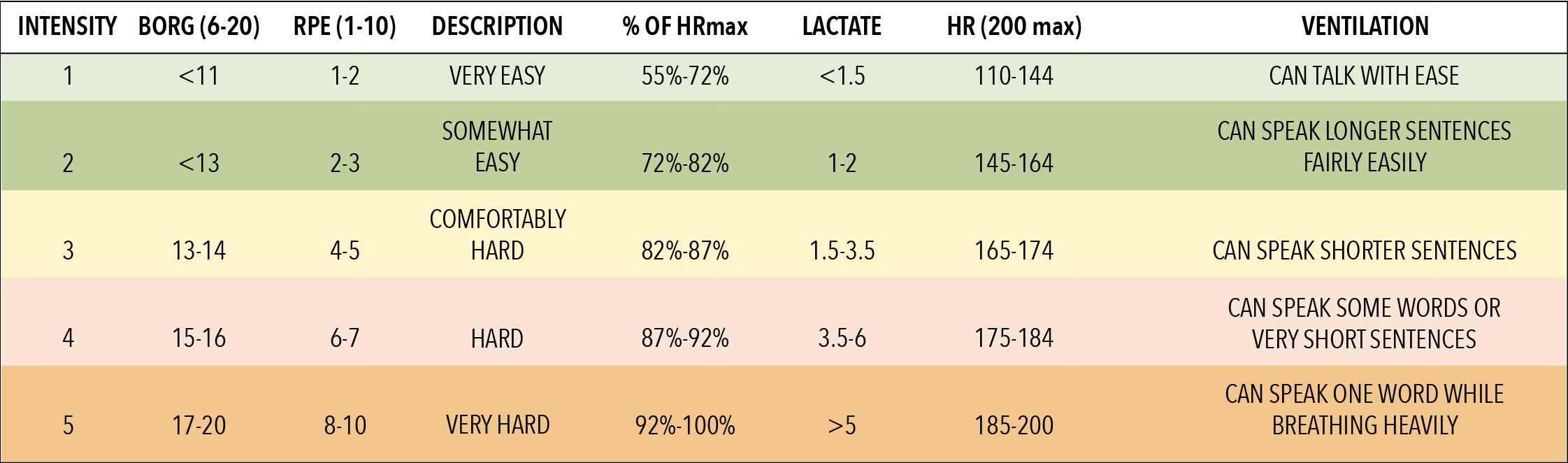
In the test I shared (above), at 70% of max heart rate, my lactate is ~1 mmol above baseline. Using a percentage of max heart rate to set my zones, would set my Green Zone too high for my current fitness.
Seeing lactate rise at a relatively low heart rate gives me confidence that there’s no need to push effort at this time of the year.
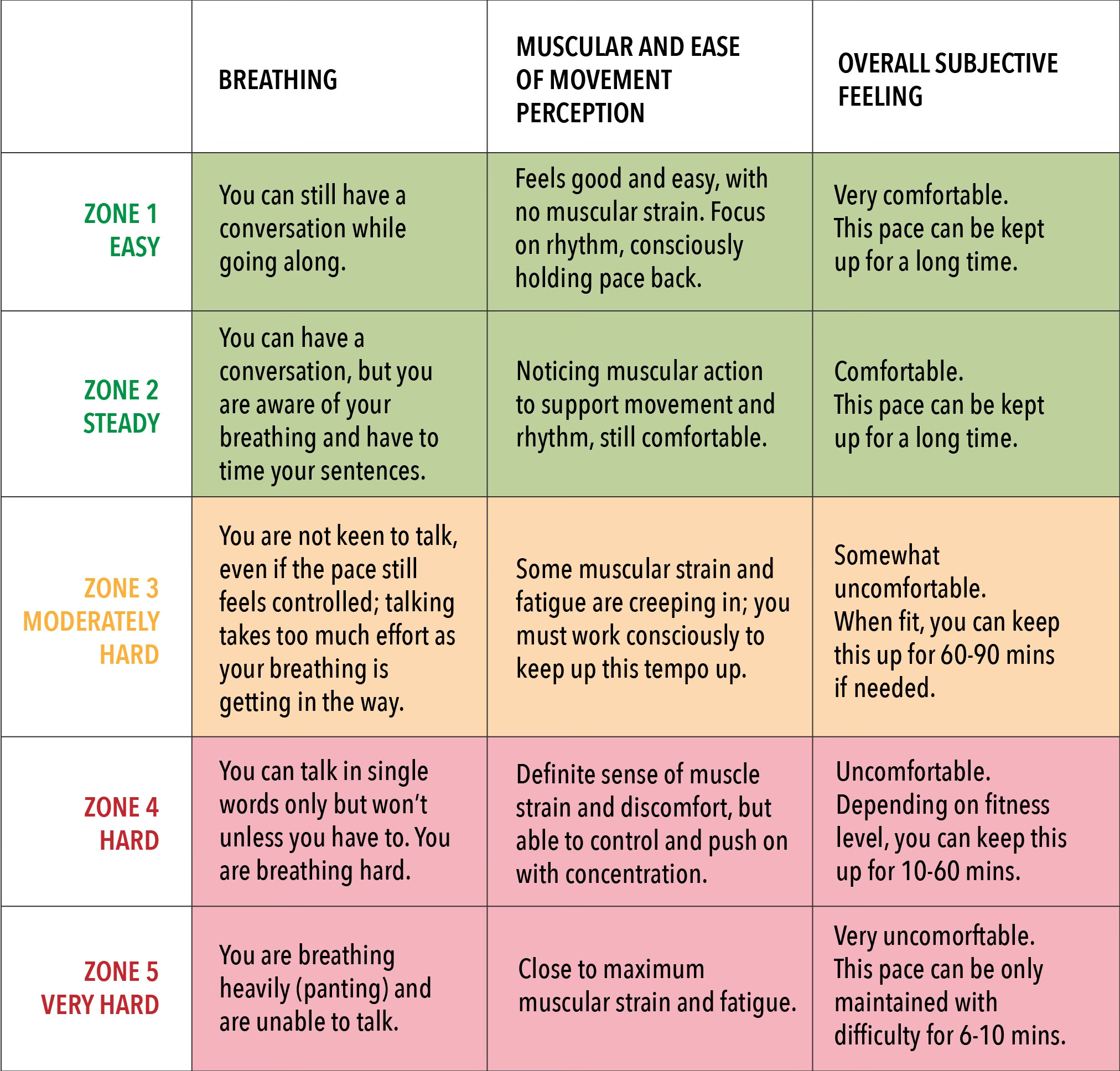
If I tried to push then I would feel the subjective perception rise despite heart rate being moderate.
The Role of Subjective Feel
Olav (see podcast link below) has useful tips on factors that will impact lactate response. There are so many different factors that you should never use a nominal lactate value in isolation.
You don’t have to carry a kit around with you (but some do). With a bit of experience, you will:
feel the metabolic shifts in your muscles,
hear the shifts in your breathing, and
see the shifts when heart rate jumps, decouples or flattens.
If you want a deep dive then read the chapter John and I wrote for you, which is linked below.

Seminar on Lactate Testing
When I published our Lactate Chapter, I recorded a seminar where I turned the pages and walked you through the contents.
The most popular video I’ve published on YouTube:
The second most popular video I’ve published on YouTube is a case study on a Full Profile test. In this seminar I explain how I plot second threshold.
This video covers the most common issues during testing.
My Testing Setup
Podium tables make it easy to have everything in arm’s reach. Lay out double the strips you expect to need.
If you are not experienced with riding to a fixed power, or effort, then virtual climbs, like Alpe du Zwift, are helpful to learn how to sit on a power (or effort). The Alpe climb has automatic segments so you can easily track average power and make sure you’re sitting where you want to test.
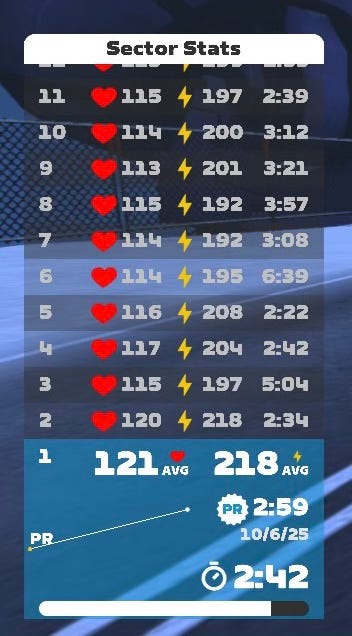
Alternatively, I use the Wahoo app (in erg mode) to control power. With my phone running my smart trainer, I capture data with my bike computer (Garmin Edge series).
Taking A Sample
I keep pedaling until it’s time to draw the blood into the strip. Touch the tip of the strip to the drop, being careful not to touch the skin.
I use 25G & 28G lancets. In his recent podcast (link below) on lactate testing Olav recommends size 21G (lower number results in wider hole). If I used 21G then I would bleed like crazy, which is a hassle for self-testing. Most of the kits come with 30G, which doesn’t work well. If you are prone to cold hands then sizing up the lancet (lower number) will help.
I use the Lactate Plus meter.
Here’s Olav talking about lactate testing. He goes deep.
The main use case is ensuring you don’t train too intensely (at whatever you’re seeking to train on the day). Most loading mistakes are errors of intensity, or density.
Keep It Simple
Green Zone: Lactate testing is most helpful for targeting Green Zone training. This keeps our endurance training “green” and avoids upward zone creep.
When you think your endurance training zones have increased then verify with a submax test.
Follow the submax test with spot checks during a subsequent endurance session.
Resist the urge to push upwards because it feels good. You’re going to be holding back, most of your career.
Coming off illness, an unusually high lactate response is a warning you aren’t healthy, yet. You’ll often see this in the post-viral period.
Tempo Zone: My second favorite application is to do a submax test as a warm-up. Then use spot checks to ensure my Moderately-Hard training is not done too intensely.
For most athletes, moderately-hard is a 2.5 to 3.0 mmol effort.
To be more accurate, do a Full Profile Test and confirm LT1 and LT2. Then set ceilings at the mid-point of LT1 and LT2.
In your Moderately-Hard / Tempo / Zone 3 main sets, you will be able to go more intensely, don’t. When I feel the burn in my muscles, I know I need to back off.
This intensity level has different names. Threshold-Minus in Sweden, Threshold in Norway, Tempo in other places. Always drill down when you hear words to describe a zone. Find out exactly what they are talking about. Threshold to a Viking is not the same as Threshold to a Yank.
Red Zone: Zone 4 and Zone 5 training is targeted based on pace / power. Lactate is useful for making sure Zone 4 doesn’t get too intense and for checking if there is a normal (ie high) lactate response in Zone 5.
Muted lactate, and heart rate, responses in Zones 4 and 5 are a warning sign of excessive fatigue.
I have turned comments on for all readers.
If there’s anything that isn’t clear then this is the place to ask.
Back to Table of Contents
Hey G,
Great stuff! 🙏
FWIW I find standard kitchen paper towel, like bounty, is great for wiping the first drop as it has a useful draw/ wicking effect to get a fat and juicy 2nd drop. It may be the same as dental gauze, but more easily found 😎
Thanks for this Gordo. Do any UK subscribers have a recommendation for a lactate tester that is available this side of the pond? The Edge doesn’t seem to be available here.