
Make Time Your Ally
What's Your Formula For Success?

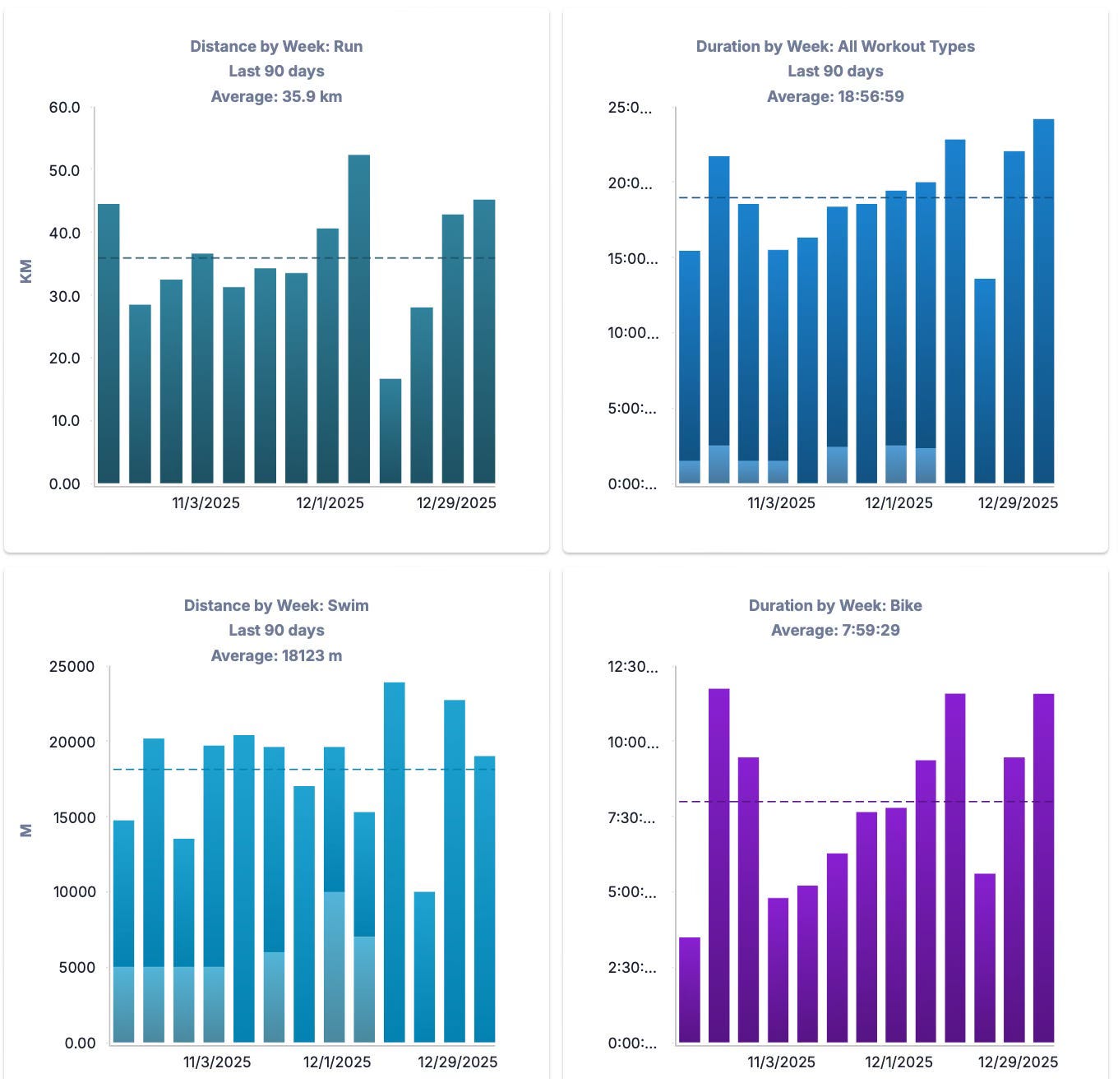
The chart above is a visual of what I explained last Sunday => what I cared about when I was racing elite.1
When combined with: (1) key workout data; and (2) race performances, you have a simple display of how you’re doing.
From Chapter One of Lemon To Legend:
The time commitment of an elite athlete is completely impractical for most.
Long-distance elite triathletes train between 20 and 30 hours per week, and the amateurs 12 to 20 hours per week.
Standard-distance elite triathletes train between 20 and 25 hours per week, and the amateurs 8 to 15 hours per week.
I think you should set the floor closer to 12 hours (see below).
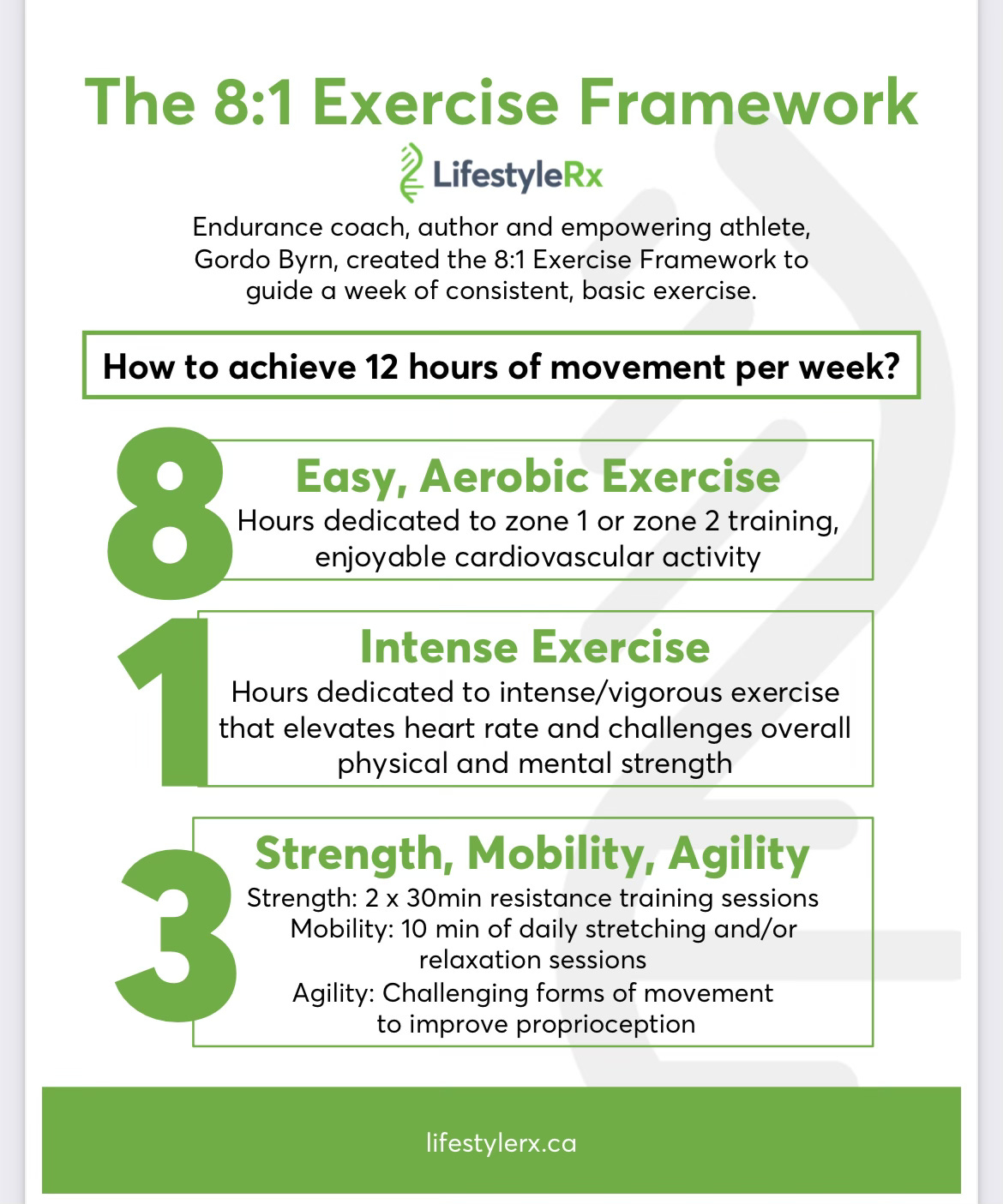
So that gives us a weekly range of 12 hours up to 30 hours (or higher) for your favorite high-volume elite.
Looking back across 2025, my range was 11 to 28 weekly hours. I was sick for the 11-hour week, and the 28-hour week had a some zombie training (which I prefer to avoid as it’s usually maladaptive).
I have male & female peers who can tolerate up to ~32-hour weeks. The edge of human performance (The Edge) is an equal-opportunity place. We should all remember that The Edge is a location to visit. The Edge is not a permanent destination.
Top Amateur Loading (10-20-50)
10-20-50 training refers to:
10 hours of cycling
20 kilometers of swimming
50 kilometers of running
To that, we add:
2 strength sessions (upper & lower)
2 (p)rehab sessions (personal limiters & injury prevention)
In the winter, as an elite, I’d add 4-5 hours of yoga on top of all that (and replace the rehab sessions). Toss in 2-3 weekly massages, push the running closer to 70 km, and elite sport is a full time job. Even when we had spare time, we were too tired to get much done.
That’s a whole lot of exercise, far more than anyone needs for health. Depending on which doctor you ask, I have outlined between 3 and 5x what’s required for health.

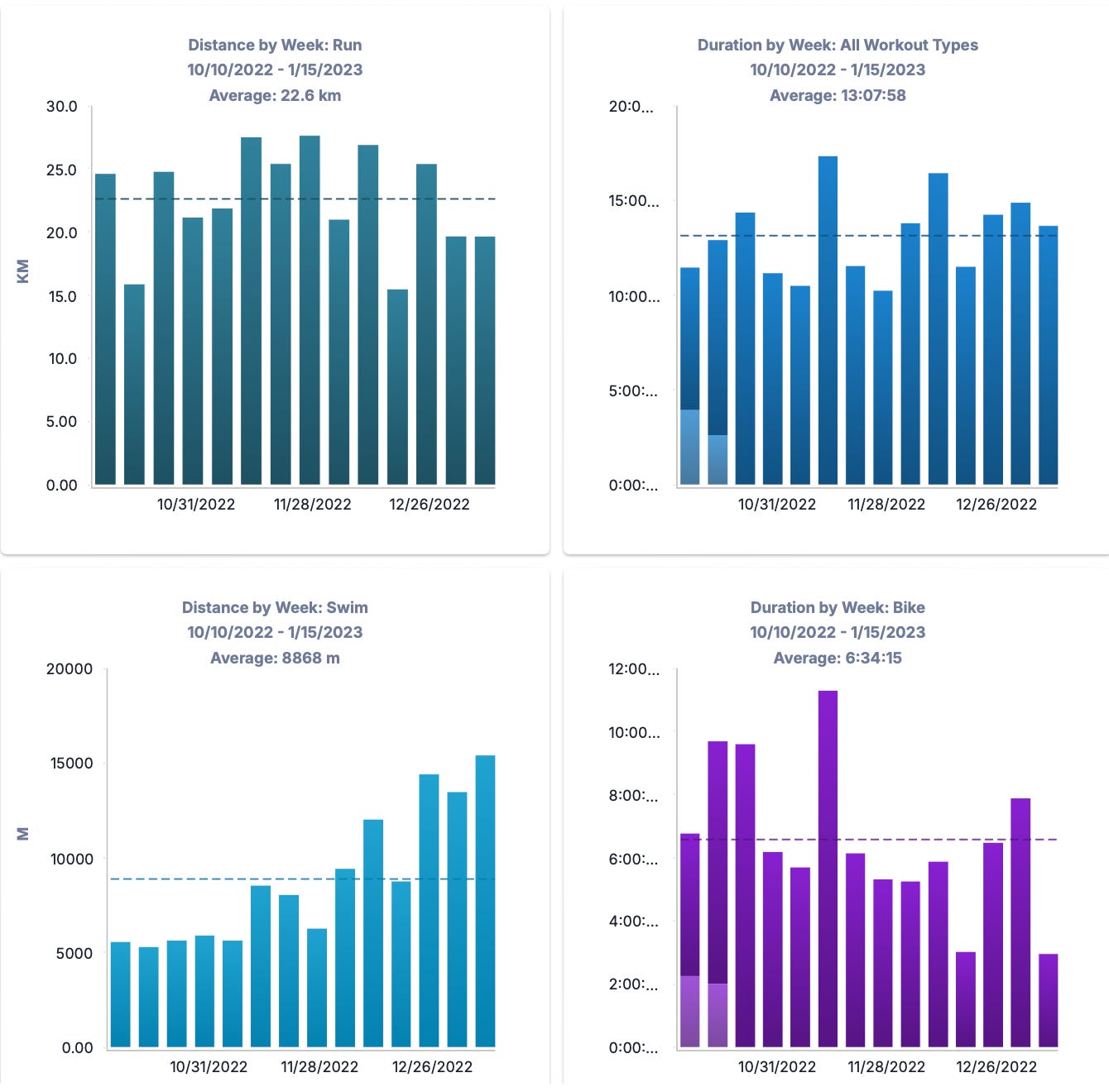
However, if you’re focused on performance then these sorts of weeks will give you a powerful stimulus. 10-20-50 represents my current limit, which is approximately double what I could manage 1,000 days ago (7-9-25, see below).
Always Build Capacity
I wanted to share 10-20-50 so you could give some thought to your own development. To build your formula, you are looking for:
A dose of training you could roll for 3-4 weeks without issue.
It’s not a stretch week. It’s a basic week.
Then you actually roll for 2-3 weeks, not 3-4.
Schedule preemptive recovery, before we need it.
Remember you will be tempted to skip the recovery when things are going well. Don’t.
On the “off” week, we focus on health and drop into the 12-14 hour range.
Timed right, you won’t need a full week. You’ll be feeling great in 3-5 days.
You mix in low-priority races and peppy sessions but… you make sure you don’t disrupt the overall pattern of building general capacity.
Always
Build
Capacity
Half the days are low-stress days. Stay active on these days, and keep the focus on rejuvenation.
If you’re looking for more detail on week structuring then see the Dynamic Loading section of Chapter Ten.
The Aging Athlete
There’s a strong relationship between work capacity and ultimate performance. Much of what we consider to be the results of aging would be better framed as the results of disuse.
Physiology and adaptation change with age but the physics of performance remain the same.
Back to eBook Table of Contents
Towards the end of 2025, I decided to write less on Socials, and more on Substack. I’ve been writing about sport on my personal blog for the last 18 Sundays. It seems more appropriate to post that content here.
Hi Gordo, two questions
1. For a more run focused athlete, what do you think the balance should be like? I think I've heard you say before to do equal hours for biking and running, at least at the beginning of the plan.
2. What do these numbers do you think look like for (long-term health). I'm reading Peter Attia's Outlive right now (and will probably review it for this months blog post) and while he's very keen on exercise, I still think he undersells how much easy aerobic exercise you should be doing to maintain functionality.
I've been enjoying your content since the days of dial-up. Thank you!
When you transition from your basic week to a stretch week do you add frequency or stretch session duration? Given equal weekly overall volumes/workloads, is more frequency better? If so, how much is too much. Was it Scott Molina who said, "Little and often fill's the purse." Thanks in advance.