
Using Zone 6 for Fast Training
Targeting The Extreme Domain

I’m currently in a VO2 Block (you can read about block periodization here). The protocol I’m using is bike-focused (explained here last year) and involves a HIIT Day and a SIT Day.
The HIIT day aims at Zone 5 - High Intensity Interval Training
The SIT day aims at Zone 6 - Sprint Interval Training
What makes the protocol different is a focus on ultra-low cadence for the intervals. The low cadence generates high-torque values.
Background
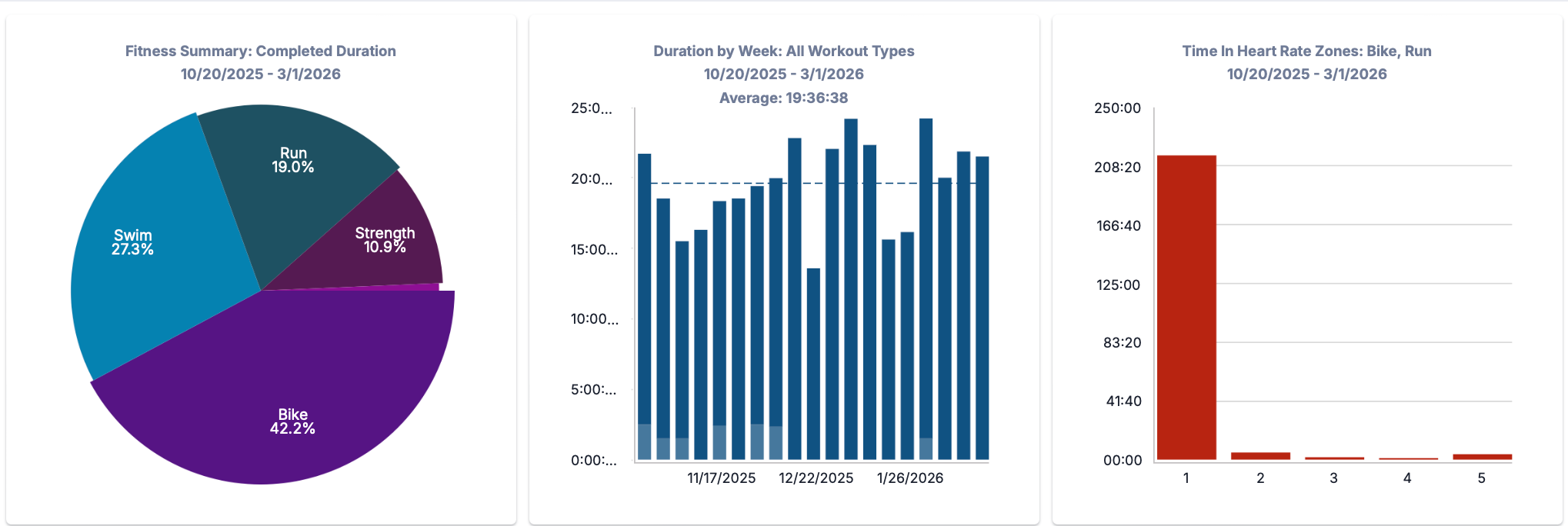
Before starting my VO2 Block, I completed a 19-week Endurance & Strength Block. I mixed in the occasional low-priority race and focused on improving my swimming.
Unsure if you need a VO2 Block? I wrote you an article, which includes a video.
Athletes who are the best at what follows, typically need it the least.
Defining Terms
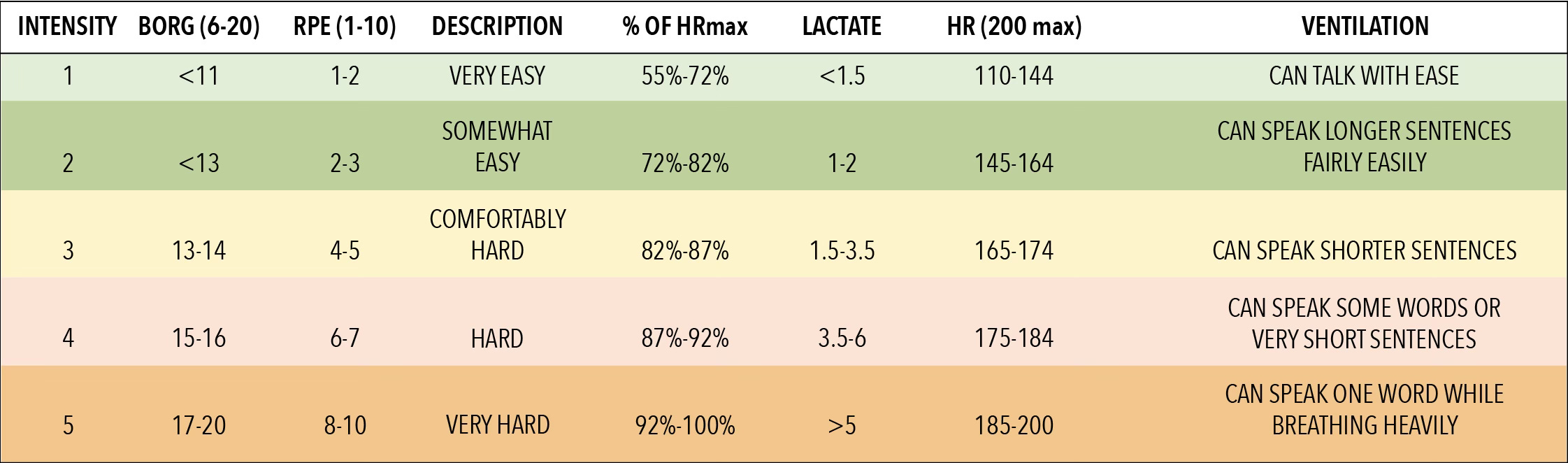
For endurance athletes, there are two zones above Zone 5 (defined below by John Hellemans).
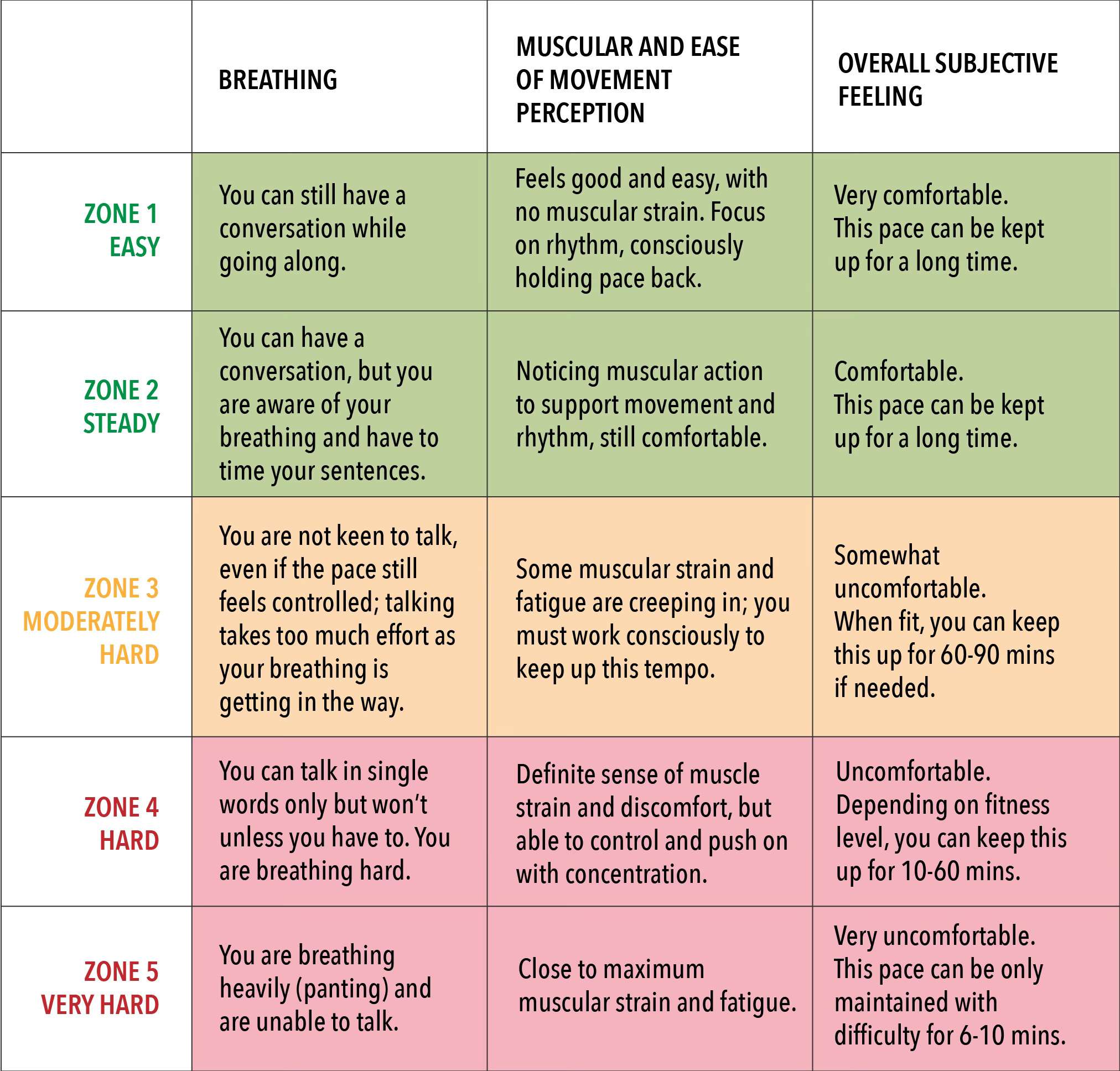
Zone 6 is Fast.
Zone 7 is Very Fast.
Using John’s chart (above) we can estimate Zone 6 / Fast as a pace/power that can be maintained with difficulty for ~2 minutes.
Zone 7 / Very Fast is defined as maximal pace/power that can only be maintained for seconds, explosive and short lived.
The 7 Zones can be grouped into 4 Domains:
Moderate Domain: the Green Zone, Zones 1 & 2, targeted around the first lactate threshold (LT1) defined as the fastest pace/power achieved at baseline lactate.
Heavy Domain: Zone 3, targeted at 1-2 mmol above baseline lactate.
Severe Domain: the Red Zone, Zones 4 & 5, no true steady state is possible with VO2 drifting upwards towards VO2 max.
Extreme Domain: Zone 6 & 7, characterized by task failure happening before the athlete reaches VO2 max.
Zones and domains sit along a dynamic continuum and do not have sharp edges.
For a deep dive please refer to our Training Zones Chapter.
Fast Day
Last year, when I used the VO2 Max Protocol, a single session was enough stimulus. With the benefit of increased general capacity, I’ve been able to turn my sprint-interval workout into a sprint-interval day.
Endurance protocols have a bias towards restricting rest intervals. Short rest is more uncomfortable and, I suppose, this leads many of us to believe it is more effective. I disagree. Short rest changes the nature of the session and prolongs recovery time.
I view Zone 6 training similar to strength training; its role is to support improved race performance. My race duration is 1 to 9 hours; optimizing 2-minute power/pace is a waste of energy. However, using 2-minute power/pace to improve all zones is a useful way to spend energy, especially when it doesn’t disrupt my week.
On my fast day, I perform three sports (swim, bike and run). At times, I move very quickly. It’s fun and addresses a relative weakness.
Next, I walk you through each session: swim, bike then run.
High-Power Swim
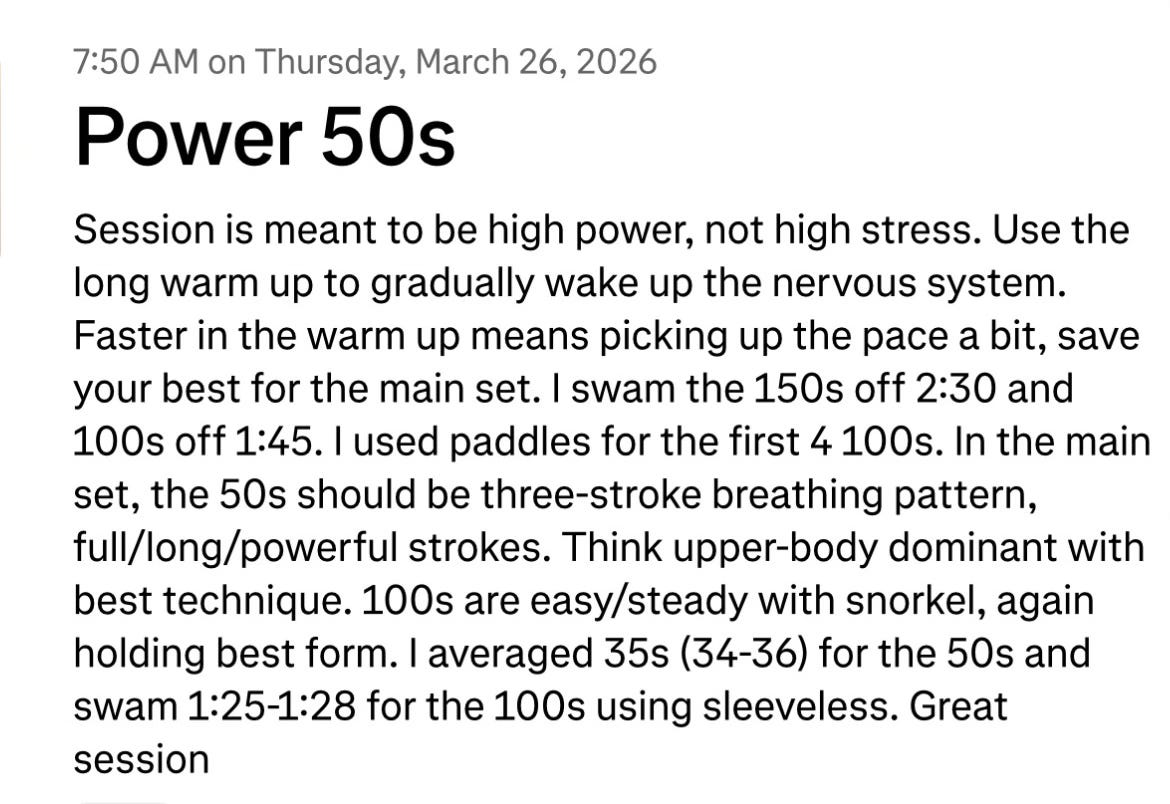
This session is either a race-simulation session or Zone 6 intervals. Last week was Zone 6 intervals and shared below.
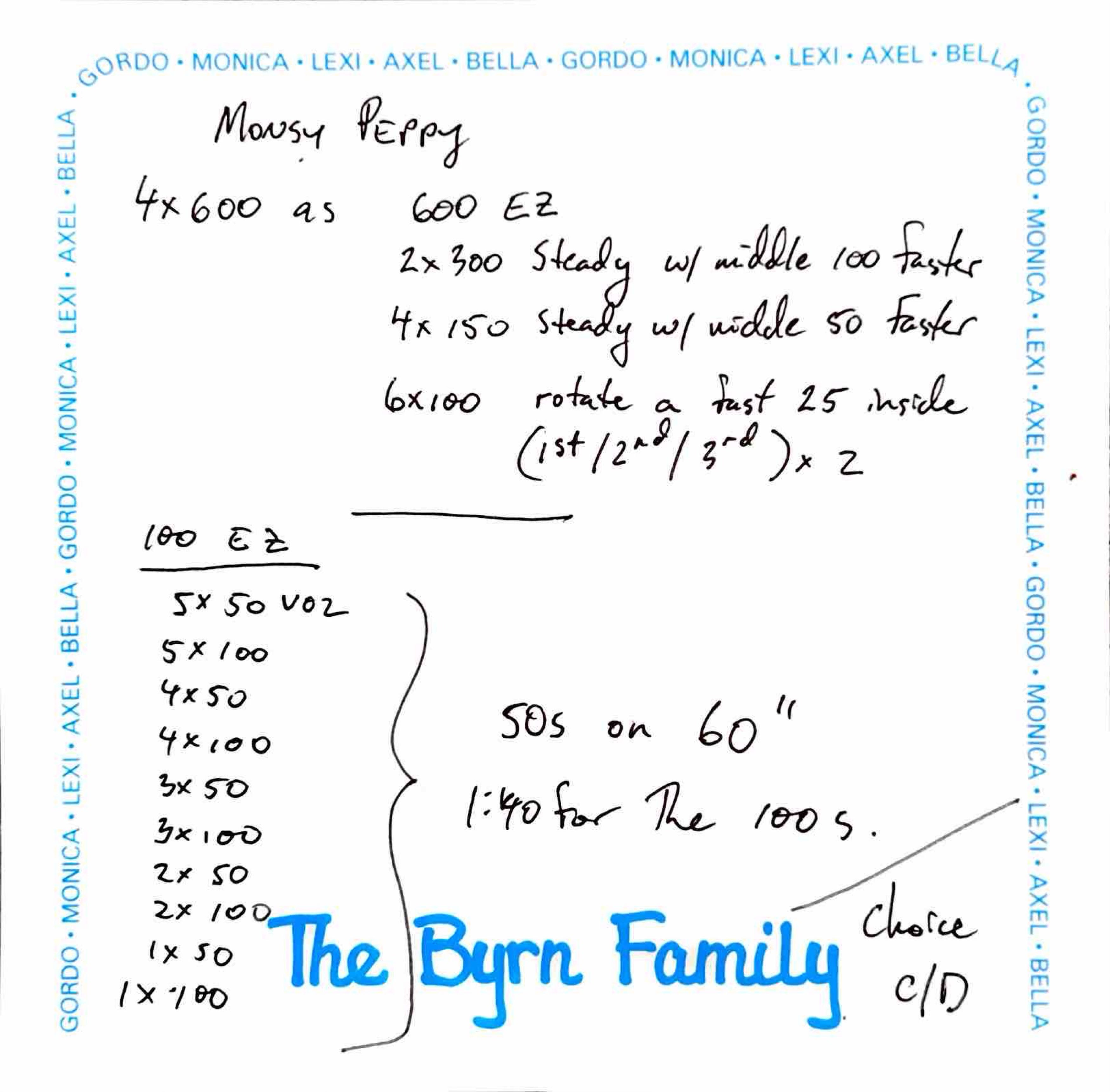
My notes following the swim. I used a sleeveless wetsuit until the end of the main set.
High-Torque Bike
The bike uses the SIT protocol of 4x (30 seconds on / 90 seconds off). The main set is repeated twice with 25 minutes at LT1 (Upper Zone 1) between sets. Intervals are done with very low cadence, rest of the workout is choice cadence.
Once again, I like a long warm-up. I do a submax test with ten minutes steps that takes me to LT1 power. Then I do ten minutes of Tempo / Zone 3. Last week’s notes are below.
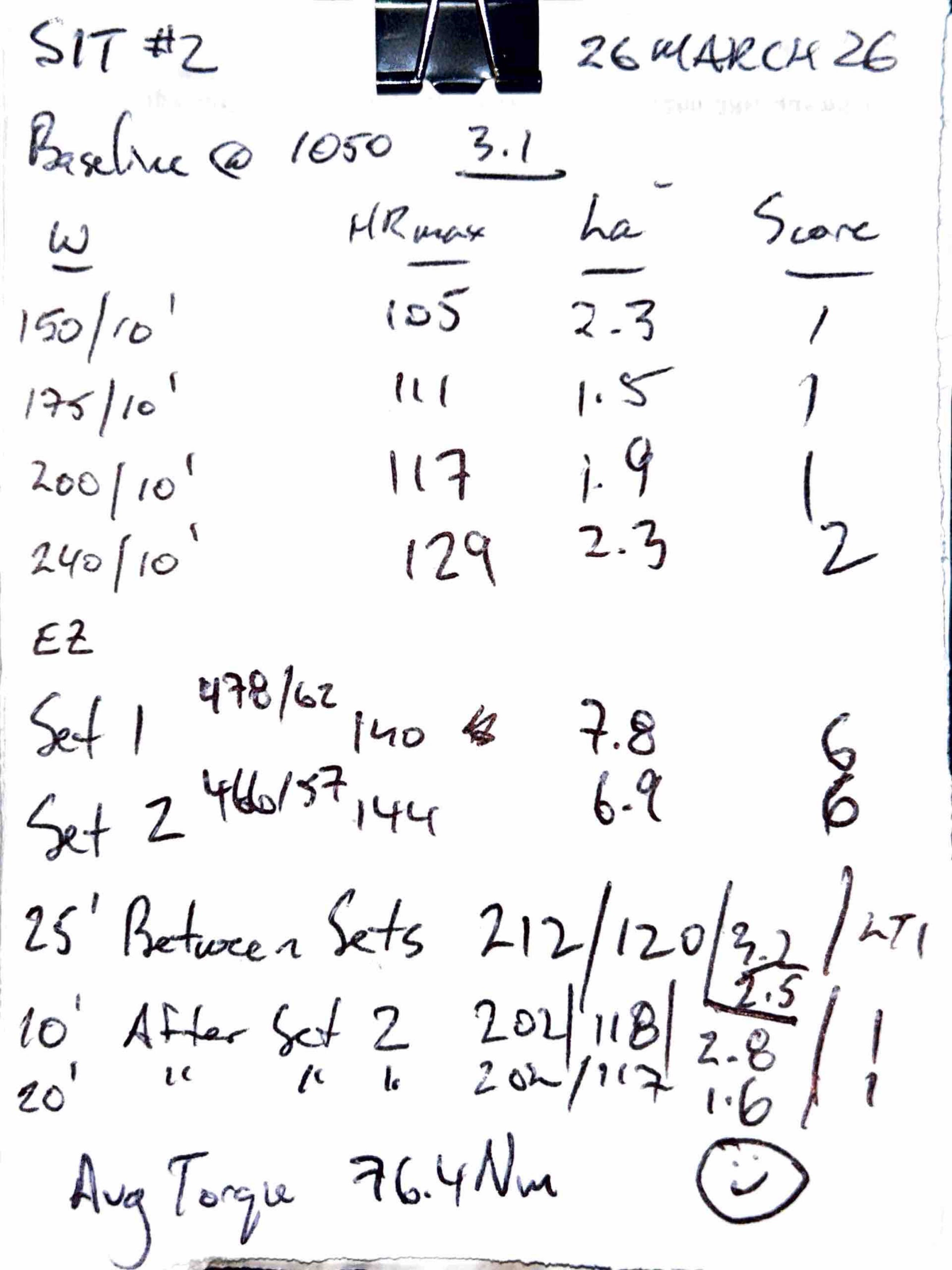
The workout is:
Submax steps to LT1 (150/175/200w, for me) using 10 minute steps.
10 minutes of Tempo / Zone 3.
Rest 5-10 minutes (I like a gel and a carb drink at this point)
Set 1 of 4x (30/90)
25 minutes at LT1 Power (lactate might stay up, don’t panic)
Set 2 of 4x (30/90)
20 minutes at LT1 Power sample lactate at 10 and 20 minutes.
Whenever I have time, I check my lactate clearance rate after peppy main sets. I sit on LT1 power and sample lactate at 10 minute intervals. You will find the better your general capacity, the faster lactate is brought down.
High-Velocity Run
The run session uses the same main set as the bike (4x30/90) repeated twice.
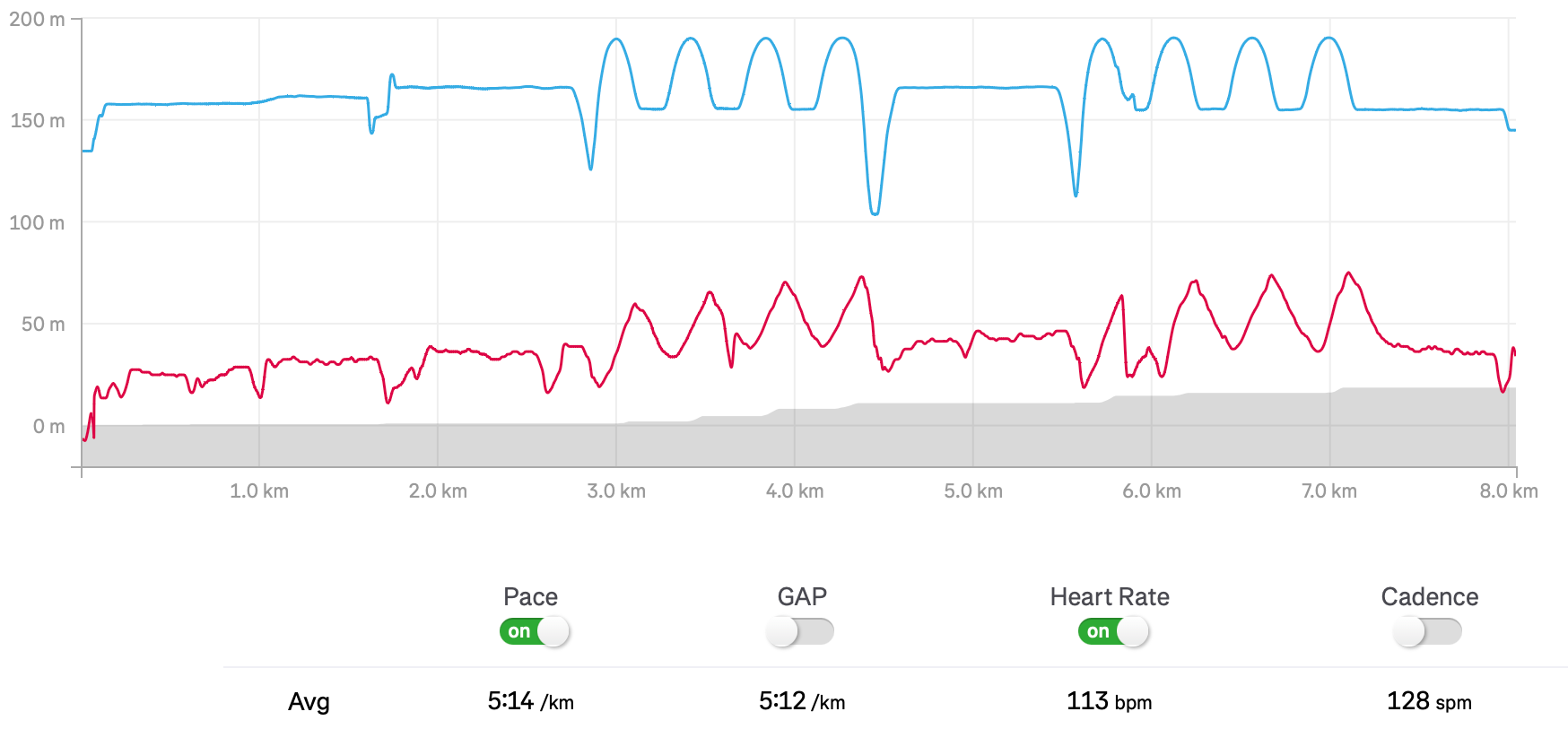
My on-pace is 20 kph (3 minutes per km) and my off-pace is 10 kph (6 minutes per km). My 5K pace is ~3:42 per km.
By using a treadmill acceleration is more gradual than outside. This is a low-stress, high-velocity session.
Fast Day Summary
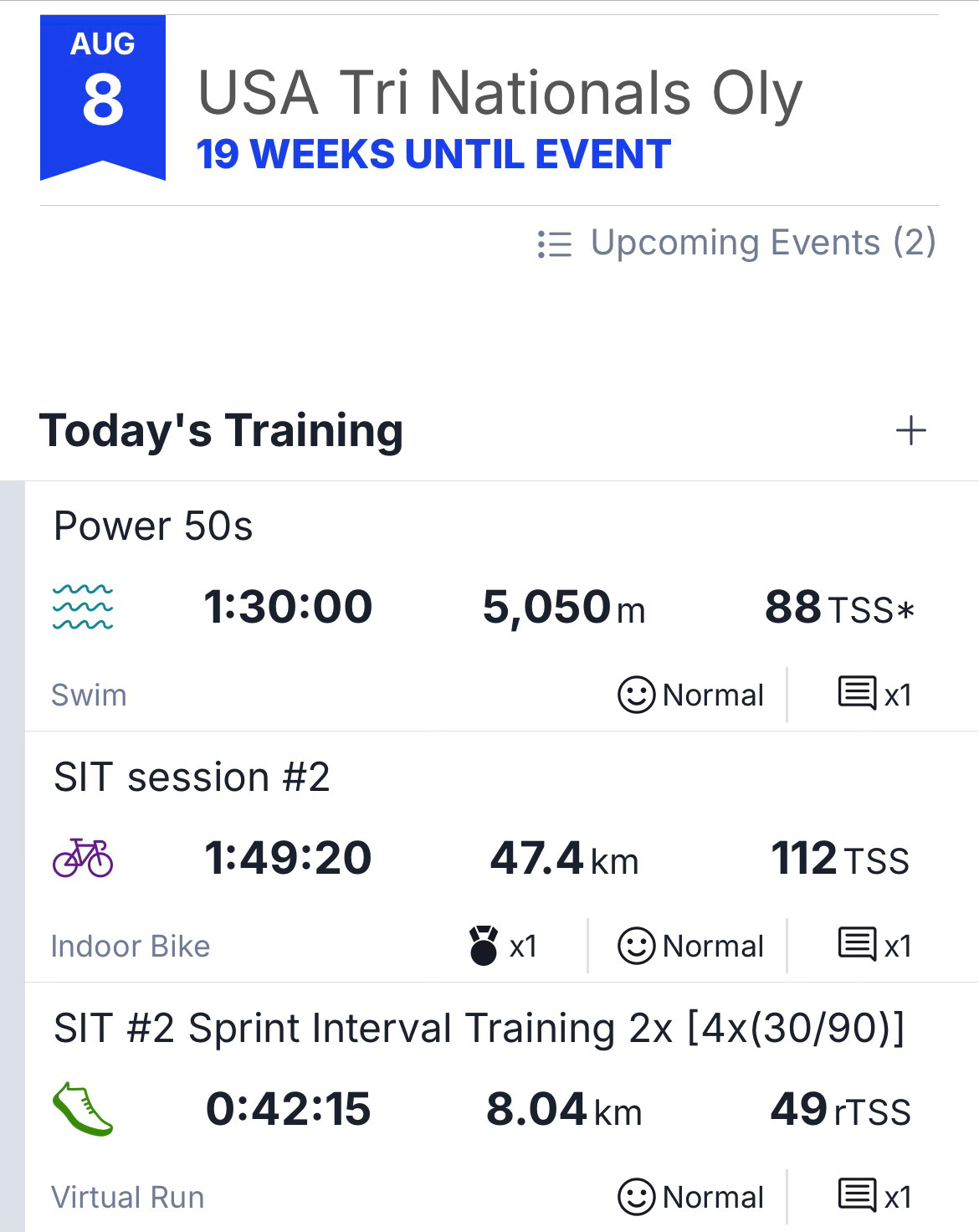
We end up with ~4 hours of training that contains ~16 minutes of Zone 6 work. I always take an easy day (or two) following my fast day.
This year here’s how the week looks.
Endurance Day
HIIT Day
Easy Day
Fast Day / SIT Day
Easy Day
Easy Day
Endurance Day
If you need more recovery from the HIIT day (which tends to hit me harder) then put the back-to-back easy days before the SIT day.
The SIT day is non-specific, I don’t worry if I carry a little fatigue into it. What I want to ensure is I’m in a position to absorb, and benefit from, the Zone 6 work. Chapter Ten, Bringing It All Together offers you a deep dive on dynamic loading.
The use of intensity should lift your mood and performance. If that’s not happening then you’re carrying more fatigue than you realize, and/or lack the general capacity to tolerate this sort of training. This is not a big deal. Shed the fatigue and (a) perform a shortened VO2 Block, or (b) move to the next phase of your season.
A little goes a long way with this sort of training. Across a year, I only do a handful of these sessions. It truly is the cherry on top (of a lot of Zone 1 volume).
Save your best for race day.
Back to The Physics of Performance
Back to eBook Table of Contents
Thanks Gordo. Just remind me - SIT (in your context) = Sprint Interval Training?
Awesome, awesome, awesome article. This is such a well described way to appropriately add on SIT. Thanks as always Gordo. I look forward to following how you “maintain” some of this pep closer to your goal race.