
Breaking Free From Red Slice Thinking
Optimizing the whole pie & other topics

When I listen to experts discuss health and fitness there’s often a gap between their discussions and my lived experience. This gap is largest with experts who don’t race, themselves.
A few topics where I’ve noticed a disconnect between the experts and my lived experience:
HRV
Sodium Intake
High Carb
Alcohol
Zone 1
Stress & Adaptation
Environment
That’s our topic today.
Heart Rate Variability (HRV) Is Seriously Variable
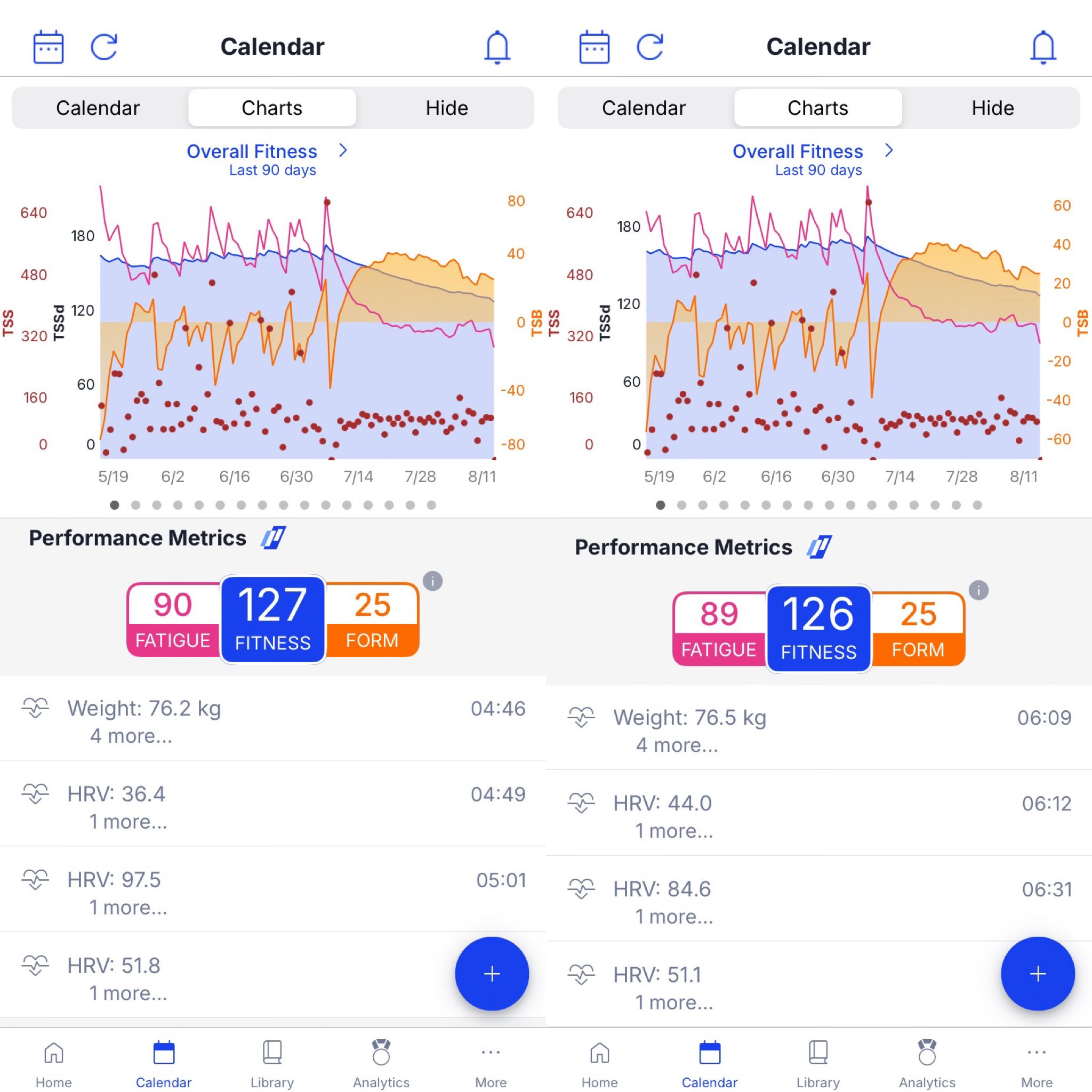
The only reliable signals I get from four years of HRV measurement are:
Suppressed overnight average HRV.
Suppressed morning measurement (if and only if) it stays suppressed across multiple measurements.
These are caution and/or red light signals for me. I haven’t been able to detect a reliable green light signal as my readings are all over the place.
Resource: Learn about Tracking Heart Rate Trends in Chapter Ten.
Health & High Carb
25 years ago, you wouldn’t believe the amount of salt endurance athletes consumed. I coached large, male athletes who were convinced they needed 1,000+ mg of sodium, per hour, whenever they were training. These guys were doing 20+ hours a week. We never considered the health implications of placing ourselves on an extremely high-sodium diet.
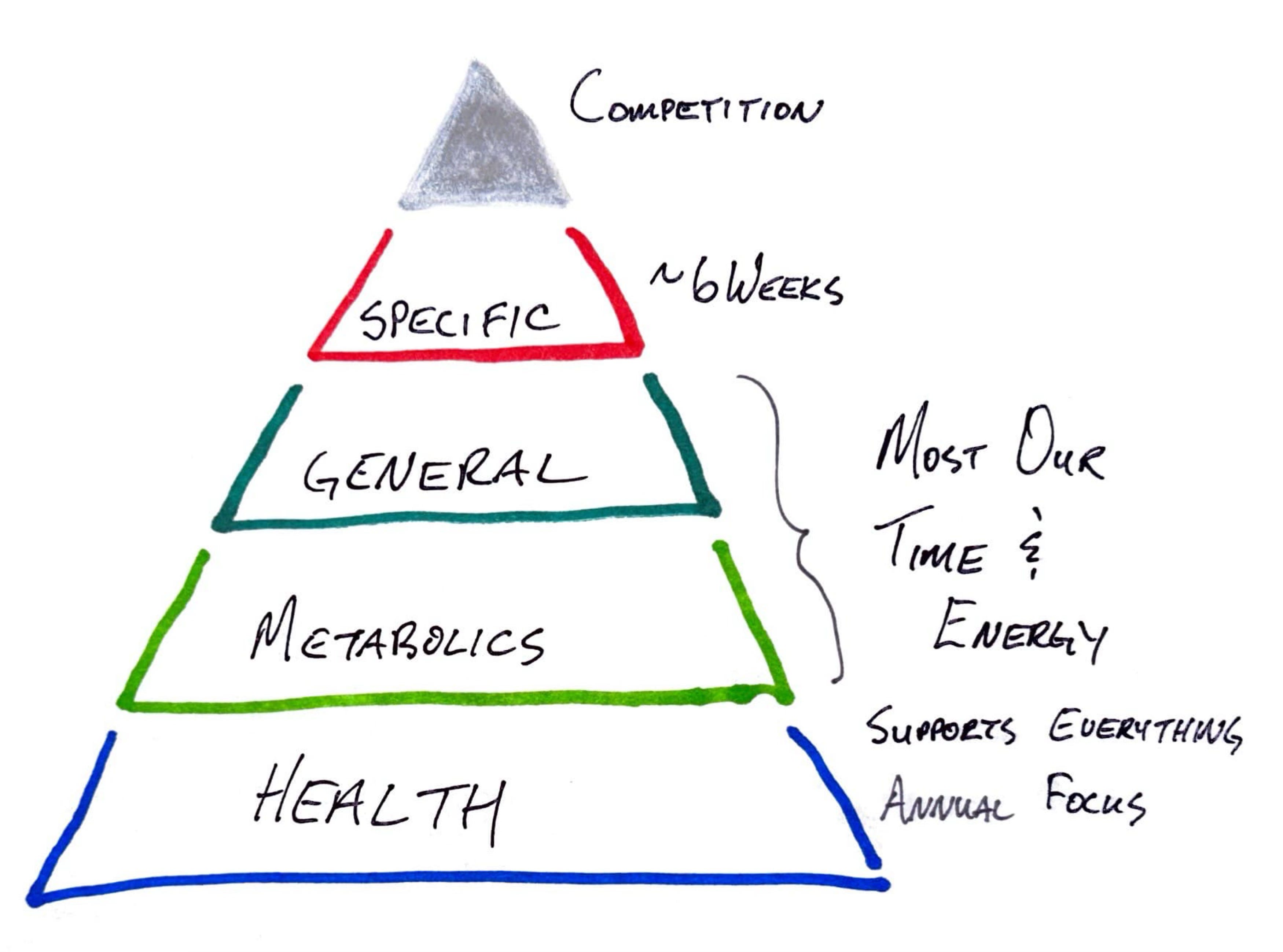
Today, I feel the same way with the high carb strategies used by elites. I suspect there are health costs associated with chronic high sugar intake that we haven’t identified. A piece of the health puzzle that is missing for the casual observer is an elite endurance lifestyle (in and of itself) is not healthy.
High Sodium
High Carb
High Stress
High Load
High Performance
…are places we temporarily visit then return to the health focus that provides the foundation for long-term performance.
Resource: Learn how to phase your nutrition by reading my Top Amateur Nutrition Article or watch my Top Amateur Nutrition Video.
Alcohol
Looking at alcohol’s effects on HRV (it makes our HRV data mimic sickness), I think alcohol is worse for us than commonly accepted.
If health, healing or performance matters then avoid it.
Zone 1, Stress and Adaptation
When I returned to structured training, my buddy Alan Couzens, made the point that his analysis indicated that the best value training was Zone 1. My younger self is in that database and Alan’s other athletes are representative of my physiology.
I figured, why not listen to Alan. Zone 1 worked extremely well to quickly ramp my training volume, then my load, then my race performance, to the tippy top of my age division.
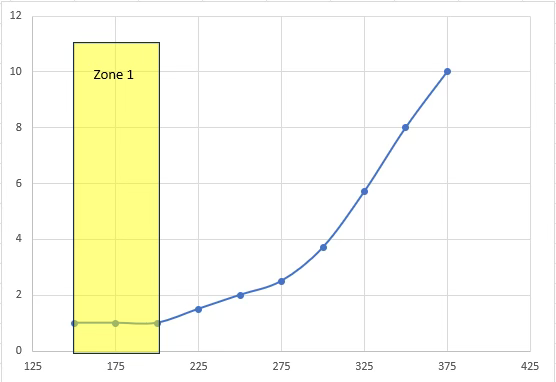
But why? Why did Zone 1 work so well?
Shifts in metabolic fitness?
The capacity to do more volume?
Other factors?
Honestly, when I come across something that works as well as Alan’s advice I don’t care why. I keep applying it and reap the benefits.
But then… I saw Stephen Seiler revise one of his charts…
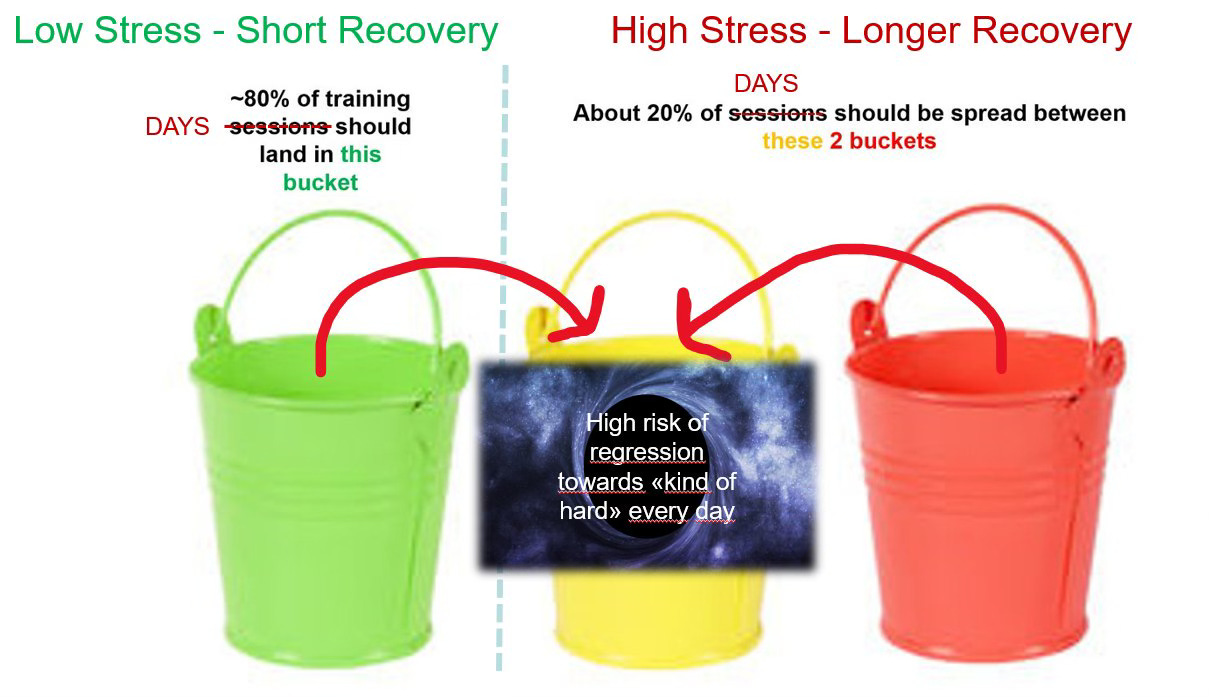
So I’ve got Alan telling me that Zone 1 is good enough for endurance adaptations and Stephen revising his view on what we should be polarizing => polarize stress.
What if our nervous system is the key that unlocks the move from good to great?
Hang around elite athletes and you will notice everyone does a lot of exercise but the results are highly variable. The best way to put it is explained by Manual Sola Arjuna in his book, The Nature of Training. I’ll paraphrase:
Same Athlete, Same Training, Different Results
Different Athletes, Different Training, Same Result
Manuel’s point is specific protocols are not decisive because we are working with complex systems. Manuel’s book (linked below) is worth your time. He thinks outside the box and is an experienced athlete/coach.
All the above, came together when I remembered my trigger to stop training seriously.
I was living in a house of preschoolers and stopped recovering, literally.
I kept doing less, lowering training stress, and continued to feel worse and worse.
Unlike getting divorced (1999/2000), fatherhood is not a temporary setback. Family is a multiyear journey. Perhaps, what we call excessive stress, is a brain-body phenomenon that manifests in the nervous system. My nervous system was absolutely shot, for years.
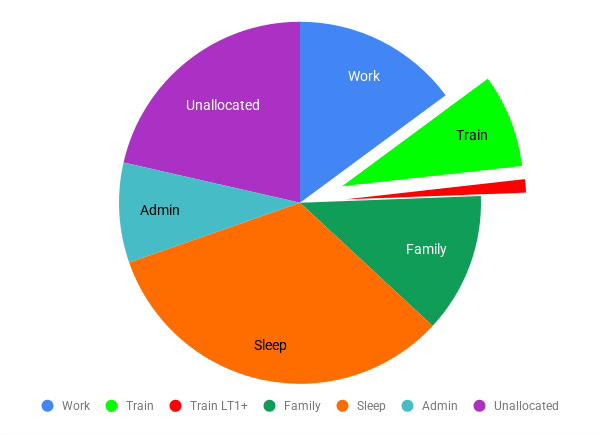
If you are following me, so far, we have…
Zone 1 working way better than expected.
Chronic (nervous system) stress impairing recovery, under any training protocol.
Doc Seiler’s research pointing towards stress as an important factor.
Let’s do a little math…
24 hours a day, 7 days a week, 168 hours a week.
12 to 28 training hours per week, depending on athlete level.
0 to 60 working hours per week.
0 to 80 parenting hours per week (moms of newborns more).
14 to 35 admin hours per week.
50 to 60 sleeping hours per week.
What stands out.
Even as an elite, I didn’t hit 18% of my hours on training.
More typically, my training allocation is <10% of my hours.
Athletes spend a lot of energy focusing on the 5-15% of their hours that involve training protocol. Perhaps, Zone 1 works because it balances the stress present in the other 85-95% of an athlete’s life.
The reason there’s no clarity in training protocol is because training response is swamped by everything going on outside training.
Physiologists, to study training response, you must study the non-training environment.
Athletes, the non-training environment is more important than your protocol.
Stressful training hours (hours above LT1) across a year are a small fraction of total hours. In my program, it’s ~2% and my adaptation has been both rapid and outstanding. I’m one of the best athletes in the world for my age. I’m a mile away from 20% of my life being stressful.
Most athletes seek to optimize a sliver instead of managing their whole pie.
Our parasympathetic system requires support to tolerate a handful of truly challenging sessions. Choose stressful sessions with care and focus on your entire environment.
If our environment, or our thinking, is chronically stressful then training protocol doesn’t matter.
Keep it simple and persist.
Resources:
Alan’s Substack is an outstanding resource for the technically-minded athlete with an affinity with data.
I recommend Manuel’s Substack which extends the concepts discussed in his book, The Nature of Training.
My article on Post-Syndrome Training discusses lingering chronic illness, without a clear physical cause. To break free, address the nervous system stress in your entire life. This includes our inner life, that the world rarely sees.
I really enjoyed this post particularly the focus on accumulating Zone 1 easy zone train and building volume. I went back and reread your chapter linked as well about the basic week. I hope that as a physician who follows your work, reading and physiology lessons along with Alan Couzens that I am a physician who understands the harsh effects of daily lifetime stress, food choices, alcohol on metabolic health AND physical performance. Thanks for all the teaching. And motivation!
That's really provided clarity on a lot of disparate information i had floating around in my head. Thanks